Arduino Kits

Arduino Basic Kit Set (UNO R3)
RM70.00
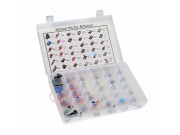
37 in 1 Sensor Kit Set
RM85.00

Arduino Starter Kit Set (UNO R3)
RM125.00

RM70.00
RM85.00
RM125.00
RM35.00
RM85.00

RM4.50


N0120230A AC current transformer 0.2-30A Adjustable SCR N0..
RM50.00

The ZK-PP2K signal generator is a versatile signal generator.it can directly drive LEDs, motors, sol..
RM40.00


Raspberry Pi Pico 2WRaspberry Pi Pico 2W is the latest addition to the Pico 2 fa..
RM48.00

The Raspberry PI Pico Mini RP2040-ZERO Microcontroller Development Board by ICGOICIC&..
RM20.00

Raspberry Pi Zero W We have been carrying Raspberry Pi Zero W (Wireless) since ..
RM125.00


Product DescriptionSpecification:Size: 30*30*7MMVoltage: DC 5VCurrent: 0.15ASpeed: 9500+5%RPMNoise: ..
RM7.00

DescriptionThis is a 3W high-power 850 infrared light, adjustable resistance. Comes with an onb..
RM15.00

Raspberry Pi GPIO Board Multifunctional Cascade Expansion Extension Board is used for extending the ..
RM25.00

ESP32-C6 is a micro-controller development board with small size and various digital interfaces.In h..
RM30.00

DC Power Shield V1.1.0 for WEMOS D1 Mini Shield Development Board Accepts 7-24v DC and regulates to ..
RM8.00

High Performance Dual-core Processor: The BSROBOTIC UNO D1 R32 Esp32 Development Board features a po..
RM55.00

Model: TF-LunaLow-cost ranging LiDAR moduleCompact Size for easy deployment in LIDAR projectsLow Pow..
RM190.00

Features1. Adopts high-performance 32-bit RISC-V single-core processor with main frequency up to 96 ..
RM38.00

RM10.00
D-Matrix-MAX 7219-SMD-Green

RM9.50
Dot Matrix MAX7219

RM13.00
Can Bus to TTL
RM50.00
N0120230A AC current transformer 0.2-30A Adjustable SCR N0

RM40.00
The ZK-PP2K signal generator is a versatile signal generator.it can directly drive LEDs, motors, solenoid valves, and other loads. It has the function of adjusting the number of pulses, delay time, pulse width, frequency, and duty cycle. It can be precisely adjusted according to the actual needs. It is a powerful, easy-to-use, and stable signal generating device, which is perfect for various practical scenarios. Features: Digital LCD screen display with large font for easy data reading, you can see the data clearly at a glance. It has three working modes, including PWM mode, pulse mode, and pulse mode setting, which can be switched by the user as needed. PWM mode interface displays frequency and duty cycle; pulse mode interface displays positive and negative pulse width time; pulse mode setting interface can display power-on delay time and number of pulses. Various practical scenarios design, it can directly drive LEDs, motors, solenoid valves, and other loads. LED brightness adjustment design, frequency and duty cycle can be adjusted. Motor speed adjustment design, frequency and duty cycle can be adjusted. For the suction and release driving of solenoid valves, the automatic cycle, delay output, and cycle times (or infinite cycle) can be set. To control the starting and stopping of the equipment, perform switching fatigue tests, voltage drop tests, and other tests to verify the reliability of the customer's equipment. For a delayed starting load, the delay time can be set after the delay has been on or intermittent work. 3.3-30V wide voltage input, 5.08mm terminal wiring, it is designed with one button to control starting/stopping. Specifications: Name: Signal Generator Material: plastics Input voltage: 6.0-36V Output type: MOS switch With load capacity: <8A Connecting large load: Yes Wide viewing angle screen: Yes Operating voltage:3.3-30V Frequency ranges: 1Hz~150KHz, accuracy about 2%. Motor speed control generally choose 20KHZ Number of pulses: 1-9999, or infinite (display "----", representing infinite) Delay output time: 0.000s-9999s, the minimum can be set 1ms Duty cycle ranges: 0-100%, 1% steps Positive and negative pulse width length: 0.000s-9999s, the minimum can be set 1ms Output load capacity: less than 8A (MOS switching tube) Output amplitude: amplitude equal to the supplyvoltage (OUT+ and V+ modules are directly connected internally) Item size: 78 * 48 * 27mm / 3.07 * 1.89 * 1.06in Item weight: 42g / 1.48ounce Package size: 110 * 70 * 50mm / 4.33 * 2.76 * 1.97in Package weight: 67g / 2.36ounce

RM48.00
Signal Generator YT-420A current 4-20mA
RM20.00
STM32F103C6T6

RM55.00
Raspberry Pi Pico 2
RM48.00
Raspberry Pi Pico 2WRaspberry Pi Pico 2W is the latest addition to the Pico 2 family, now featuring wireless capability! It is built on the second-generation microcontroller IC, the RP2350A, designed and produced by the Raspberry Pi engineering team. Enhanced Microcontroller Development Board2nd generation of Raspberry Pi Pico W board comes with the following enhancements:CPU: Two Dual-Core CPU:Dual ARM Cortex-M33 Cores Dual RISC-V Hazard3 CoresSystem clock up to 150MHzSRAM: 520KByte4MByte QSPI Flash MemoryComprehensive Security: ARM TrustZone, 8KB on-chip OTP Storage, Secure bootXIP v2 for better flash memory interface12 PIO state machines (3 blocks)We probably have lots of microcontrollers in our house already. For example, a washing machine is controlled by a microcontroller; most likely our watch is too; there is also one in a microwave. Of course, all these microcontrollers already have their application programs. This Raspberry Pi Pico 2W is a microcontroller board that can perform physical computing and can be easily reprogrammed over a USB connection. Gary from the Gary Explains channel helps to highlight the boost of Pico 2 or RP2350: Pin-to-Pin Compatible with 1st Generation of Pico WThe Raspberry Pi Pico 2W maintains complete pin-to-pin compatibility with its predecessor, the Raspberry Pi Pico W. This ensures a seamless transition for existing projects and carrier boards, allowing users to leverage their existing investments and expertise. Developers can effortlessly migrate their code and hardware designs to the new Pico 2W, benefiting from enhanced performance and expanded capabilities without the need for extensive modifications. We have tested the Raspberry Pi Pico 2W on the following boards and it works effortlessly:Maker Pi Pico BaseRobo PicoMaker Pi Pico Mini Base Work Seamlessly with Raspberry Pi Computer You can always connect the Raspberry Pi Pico 2W to any preferred computer with Windows, macOS, and Linux that supports Python 3.0, yet connecting it with the Raspberry Pi Single Board Computer will be perfect as the same team designs it. The official Operating System, Raspberry Pi OS comes pre-installed with Thonny Python IDE which is ready for you to get started writing MicroPython code for Pico. If you are using another OS (Windows, macOS, or other Linux distribution), please visit https://thonny.org/ to download the IDE and install it. A More Powerful MCU Dev Board (Dual-Core ARM Cortex-M33)Raspberry Pi Pico W comes with dual ARM Cortex-M0+, while the new Pico 2W comes with a Dual-Core ARM Cortex-M33 and a Dual-Core RISC-V Hazard3. Flexible clocking system, with configurable up to a maximum speed of 150MHz! This tiny MCU comes with a whopping 520 Kbyte of SRAM, an external QSPI Flash with a capacity of 4 MByte, and enhanced eXecute In Place (XIP v2). Larger RAM and Flash size enable you to write high-level programming languages like MicroPython and CircuitPython for Raspberry Pi Pico 2W. New Pico 2 Series with Wireless by Raspberry Pi Compact and Ready to be Mounted into the Product Raspberry Pi Pico 2W preserves the good of its presuccesor, it is ready to be embedded in any product out of the box. If you choose the version without pre-soldered headers, it is ready for SMT (Surface Mount Technology). Raspberry Pi Pico 2W is extended out to a 40-pin 21x51 DIP (Dual Inline Package) style, 1mm thick PCB with 0.1" (100mil) through-hole pins. The pins are further extended to the PCB edge with a castellated circuit board. This enables it to be soldered to another PCB board without the need for extra header pins, making it a smaller and more compact finished product. Awesome! A good example is Cytron’s Maker Pi Pico (1st generation of Pico): Meanwhile, the version with pre-soldered headers is breadboard-friendly, so students, makers, and engineers can use the Raspberry Pi Pico 2W on a breadboard or any standard PCB board for development or prototyping. If the Raspberry Pi Pico 2W is inserted onto a breadboard, there are two rows of jumper holes on both sides of the PCB for prototyping. Note: The Raspberry Pi Pico 2W GPIO runs at 3.3VDC. The maximum voltage that the I/O pins can tolerate is 3.3V. Applying voltages higher than 3.3V to any I/O pin could damage the board.Enhanced version of Raspberry Pi Pico W, officially from Raspberry PiRP2350A MCU designed from the ground up by engineers of the Raspberry Pi TeamCPU: (either)Dual ARM Cortex-M33 Cores Dual RISC-V Hazard3 CoresWireless Capability, CYW43439:2.4GHz 802.11n WiFiBluetooth 5.2PCB AntennaSystem clock up to 150MHzSRAM: 520KByte4MByte QSPI Flash MemoryComprehensive Security:ARM TrustZoneOptional boot signing, enforced by on-chip mask ROM, with key fingerprint in OTPProtected OTP storage for optional boot decryption keyGlobal bus filtering based on ARM or RISC-V security/privilege levelsPeripherals, GPIOs, and DMA channels individually assignable to security domainsHardware mitigations for fault injection attacksHardware SHA-256 acceleratorXIP v2 for better flash memory interfaceReady with USB Micro B receptor for Power and DataSupport USB 1.1 Host and DeviceConnected to the USB port and it will appear as USB Mass Storage by default, no driver is neededSupports CircuitPython, MicroPython, C and C++, Arduino IDE Programming LanguageDrag and Drop Program loading method, just like moving files in Windows ExplorerComes in 40-pin 21x51 'DIP' style 1mm thick PCB with 0.1" through-hole pins, breadboard-friendlyWith the edge castellations PCB, it is ready to be mounted on another PCB without an additional header pin, SMD-friendlyTwo options:Comes with PRE-SOLDERED header pins (by Cytron Technologies), breadboard-friendlyComes without header, SMD-friendlyPeripheral rich:Extended out 26 multifunction 3.3V General Purpose I/O (GPIO)23 GPIO are digital-only3 x 12-bit ADC capable of 500Ksps, Analog to Digital Converter2 x UART (Universal Asynchronous Receiver/Transmitter)2 x SPI (Serial Peripheral Interface)2 x I2C (Inter IC)16 x PWM (Pulse Width Modulation)3 x Programmable IO (PIO) blocks, 12 PIO pins that can emulate high-speed interfaces such as SD card or VGABuilt-in 12-bit ADC temperature sensor3-pin ARM Serial Wire Debug (SWD) portOnboard Programmable LED, GP25Simple yet highly flexible power supply architectureSupport USB power, external supply (2 - 5VDC), or battery power.Comprehensive SDK, software examples, and documentationOfficially from Raspberry PiOperating Temperature: -20ºC to +85ºCCompatible with any computer with a USB port, Windows, macOS, LinuxWork seamlessly with Raspberry Pi 5, Raspberry Pi 4 Model B, or Raspberry Pi 400 and Raspberry Pi OSDimensions: 51mm x 21mm x 1mmGPIO, ADC, UART, SPI, I2C of Raspberry Pi PicoNote: The photo shown is Raspberry Pi Pico W, and Pico 2W is similar.

RM20.00
The Raspberry PI Pico Mini RP2040-ZERO Microcontroller Development Board by ICGOICIC delivers exceptional performance and versatility for all your DIY electronics projects. With its RP2040 Dual-core Processor, this development board is perfect for hobbyists and professionals alike, looking to create innovative solutions in computing and robotics.Featuring:Powerful Dual-core Performance: The RP2040 processor allows for seamless multitasking, making it ideal for running complex applications.Compact Design: The Pico Mini form factor provides a lightweight and space-efficient solution for embedded systems.Versatile Compatibility: Easily integrates with various components and software, giving you the flexibility to explore and innovate.Perfect for makers, educators, and engineers looking to enhance their projects with advanced computing power, the Raspberry PI Pico comes with a new product guarantee for quality assurance.With its robust specifications, this microcontroller board opens up a world of possibilities for developing everything from simple gadgets to complex automated systems. Whether you’re designing a prototype or a final product, the Pico Mini's efficiency and ease of use streamline your workflow.

RM125.00
Raspberry Pi Zero W We have been carrying Raspberry Pi Zero W (Wireless) since 2017 and it is very useful for makers and students. It is a super low-cost single-board computer. It is cheaper than any official Arduino controller board with a 32-bit processor, and it comes with WiFi and Bluetooth. The new Raspberry Pi Zero W offers all the benefits of the Pi Zero v1.3 but with one big difference – built-in Wireless (WiFi and Bluetooth)! More specifically, this giant upgrade is the addition of a BCM43143 WiFi chip built-in to your Raspberry Pi Zero – just like the Raspberry Pi 3 Model B! Let's see the introduction from the Raspberry Pi Magazine team: With BCM 2835 (32-bit ARM-based processor) SoC running at 1GHz, the Raspberry Pi Zero is faster than Raspberry Pi 1. With mini-HDMI, micro-B OTG USB, and the same 40-pin GPIO it still has great connectivity although you'll probably need some accessories to help you hook it up to your existing devices. The best part about all this is that the Pi Zero W keeps the same shape, connectors, and mounting holes as the Pi Zero v1.3. 99% of cases and accessories will still be fully compatible with both the Pi Zero W and v1.3 - though if you have a case with a metal top there might be some WiFi connectivity difficulties. Soldering the 40-pin headers onto Pi Zero W is not everyone's favorite task, especially beginners. Some might not have the right tools to do it. And here you are the Raspberry Pi Zero WH, pre-soldered with 2x20 header pins at the factory directly from Raspberry Pi, UK. This will help in hardware prototyping and digital making, stacking with HAT and electronic parts. Raspberry Pi Zero 2 W Raspberry Pi Zero 2 W, the most significant upgrade is the CPU. The new Raspberry Pi Zero 2 W comes with a Quad-core, 64-bit, Cortex-A53 CPU, clocked at 1 GHz. At its heart is a Raspberry Pi RP3A0 system-in-package (SiP), integrating a Broadcom BCM2710A1 die with 512MB of LPDDR2 SDRAM. The new CPU+RAM package on Raspberry Pi Zero 2 W is from the Raspberry Pi engineering team, to understand more about the integration and why they choose wire-bonding instead of Package on Package (PoP) on the original Raspberry Pi Zero/W/WH, check out the post by Eben Upton (CEO of Raspberry Pi Trading). RP3A0 System-in-Package (SiP), by Raspberry Pi Blog Post There is a slight improvement in the wireless specification, the Bluetooth on Raspberry Pi Zero 2 W is upgraded to 4.2 from 4.1 on its pre-successor. Of course, it still preserves the IEEE 802.11 b/g/n WiFi and BLE. Besides the upgrade of Bluetooth specifications, the wireless circuitry is also shielded with a metal case for better RF compliance. Let's compare the new Raspberry Pi Zero 2 W with its pre-successor, Raspberry Pi Zero W: Those highlighted in Blue Color texts are the major changes. From a single-core, 32-bit CPU in the original Raspberry Pi Zero W, we now get a Quad-core, 64-bit CPU! With this upgrade alone, there is a tremendous improvement. Booting into Raspberry Pi OS desktop GUI is 3X faster than the Raspberry Pi Zero W board. From our testing, using the 32GB MakerDisk preloaded with Raspberry Pi OS, Raspberry Pi Zero 2 W boots into GUI just within ~20 seconds while the earlier Raspberry Pi Zero W takes ~70 seconds. For single-threaded performance, it is 40% faster than earlier versions too. For multi-threaded, the quad-core performance is 5.2x faster than the single-core CPU. If you are a Raspberry Pi user, you might have noticed the Quad-core, 64-bit ARM Cortex-A53 CPU is also on Raspberry Pi 3 Model B: And even it comes with a quad-core processor, the maximum power is still way below 5W, or below 1A of current. During idle (power up without doing anything), it consumes just 0.62W, which is just 124mA at 5V. Even under stress tests with active WiFi, the Raspberry Pi Zero 2 W consumes only 2.12W. That is only 424mA at 5V, still below 2.5W! Do check out the post by Jeff Gerling on his review of the Raspberry Pi Zero 2 W that also produces this power consumption chart: Power Consumption Chart by Jeff Gerling With a careful look, we notice the PCB antenna on Raspberry Pi Zero 2 W has been improved to be similar to the Raspberry Pi 4 Model B's PCB antenna! This again will improve the wireless connectivity and data rate. Thanks to Jeff Gerling, we get to know the WiFi speed improvement. This is the WiFi speed comparison by Jeff in his review of Raspberry Pi Zero 2 W: WiFi and Wired Speed Comparison of Raspberry Pi Zero 2 W vs Zero W, by Jeff Gerling Raspberry Pi Zero 2 W Specs:Processor Package: RP3A0-AU, SiP (System in Package) BCM2710A1 wire-bond with 512MB RAMProcessor: Broadcom BCM2710A1, Quad-core 64-bit SoC, ARM Cortex-A53Clock speed: 1GHzRAM: 512MB LPDDR2Built-in Wireless:WiFi: IEEE 802.11 b/g/n, 2.4 GHzBluetooth 4.2BLE (Bluetooth Low Energy)Antenna: Onboard PCB antennaMemory: micro-SDVideo output:mini-HDMIComposite Video (Test pads at the bottom layer of PCB)Multimedia:H.264, MPEG-4 decode (1080p30)H.264 encode (1080p30)OpenGL ES 1.1, 2.0 graphicsUSB Port: 1 x Micro-B USB for data and powerPower input:1 x Micro-B USB for power (no data), 5VDC5V and GND pins on 40-pin GPIO (unpopulated)Camera interface: CSI-2 compact camera connector (needs adaptor cable, 0.5mm pitch to pitch CSI)GPIO: WCH - Pre-soldered Color Coded 40-pin GPIO connector, compatible across all Raspberry Pi with 40-pin GPIOCompatibility of GPIO: Compatible with existing HAT add-onsSupported OS: Raspberry Pi OSDimensions: 65mm x 30mm x 5mm

RM17.00
DC-Fan-5V for Raspberry Pi 3

RM7.00
Product DescriptionSpecification:Size: 30*30*7MMVoltage: DC 5VCurrent: 0.15ASpeed: 9500+5%RPMNoise: 27.6DBAAir Volume: 3.14CFMPower: 0.75WWind Pressure: 4.50mm2HOService Life: 30000 hours at 40°CBearing Structure: Hydraulic BearingWeight: 5.5gPackage:1x Cooling FanProduct informationFeatures & SpecsVoltage5 VoltsCooling MethodAirCompatible DevicesPrinterNoise Level27.6 DecibelsAdditional detailsItem Dimensions L x W x H1.18"L x 0.28"W x 1.18"HMaterial TypeCopper

RM15.00
DescriptionThis is a 3W high-power 850 infrared light, adjustable resistance. Comes with an onboard adjustable resistor, for controlling the ambient light threshold of toggling the infrared LED. It allows adding night vision function to RPi cameras. You can use a small screwdriver to gently twist the variable resistor and adjust the ambient brightness to your preference. This infrared LED is a perfect addition for projects that require night vision.The LED light board and the camera PCB bottom plate can be screwed together to use (no software control is required. The working mode of the light board is that when the light is dark, the LED light is automatically turned on, and when the light is strong, the LED light is automatically turned off. The adjustable resistance on the light board needs to be adjusted. Our default delivery is not adjusted. Because different user uses the infrared LED at different locations, it will automatically turn on when it is connected by default. If no adjustment is made, the LED light will always be turned on. Bear in mind that since it is always turned on, it heats up pretty easily. It is recommended to stick a heatsink at the back of the infrared LED, on the cooling area (gold plate).How to use:Connect the Infrared LED Board to the camera PCB with screws.The screw holes are used for both attachment and power supply.Adjust the adjustable resistor to set a proper ambient light threshold, which toggles the infrared LED automatically.When ambient light is lower than the threshold value, the infrared LED is on, vice versa.Note: The 3W high-power infrared LED might cause the Pi to increase heating, heatsinks are suggested. The ideal imaging distance is within 3 meters. When the distance goes up to 6 meters, the night vision camera can just capture blurry outlines.This 3W Infrared LED for RPi NoIR Camera Module is compatible with:Fish Eye Lens Raspberry Pi 5MP IR Camera3.6mm Lens Raspberry Pi 5MP IR Camera

RM25.00
Raspberry Pi GPIO Board Multifunctional Cascade Expansion Extension Board is used for extending the GPIO pins. This board gives high reliability with raspberry pi.This module is used to extend the 40 GPIO pins of the Raspberry to another set of 2×20 pins and 8 pins in parallel accessible in the terminal blocks in which test leads are pushed. The electronic chart offers great reliability with the Raspberry and is very easy to connect thanks to its existing accessories but not included.The module offers a set of mini bridges to configure the GPIO. The press to release the two terminal blocks of 20 connections is very easy to use.Characteristics :– Communication connections: 1 TXD0 (broadcast) and 1 RXD0 (reception)– Power connections: 5 of 3.3V, 2 of 5V and 5 of GND– Pulse width modulation (PWM) connections: 2– GPIO connections: 11– PCM audio connections: 3– Connections with clock (CLK): 2– Peripheral serial bus interface (SPI) connections: 1– Input master / slave output connections (MISO): 1– Connections system validation chip (SCE): 2– I2C port connections: 8 (SDA, SCL, GOUI, EDAT, MOSI)

RM30.00
ESP32-C6 is a micro-controller development board with small size and various digital interfaces.In hardware, ESP32-C6FH4 chip is adopted, which is equipped with RISC-V 32-bit single-core processor, supports clock frequency up to 160 MHz, and has built-in 320KB ROM,512KB and 16KB LP ; is compatible to expand a variety of peripheral devices, making it more convenient to use.In terms of software, you can choose ESP-IDF development environment or for IED for development, so that you can get started easily and quickly and apply it to products.USB Type-C interface is adopted, which leads to rich peripheral interfaces without tangled plug-in and plug-in and has strong compatibility and expansibility Stamp hole design, which can be directly welded and integrated on the backplane designed by users Support a variety of low-power working states, adjust the balance between communication distance, data rate and power consumption. and meet the power consumption requirements of various application scenarios. Colour:As ShownMaterial:Plastic+Metal Package Contents:1 set * ESP32-C6 Super MINI development boardFeatureSpecificationModelESP32-C6 SuperMiniMicrocontrollerESP32-C6 (RISC-V 32-bit single-core processor)ConnectivityWi-Fi (2.4 GHz), Bluetooth 5 (LE), Zigbee, ThreadUSB InterfaceUSB-CDimensions (Approx.)Length: 18mm, Width: 16mm, Height: 10mmWeight (Approx.)0.02 kgOperating Voltage3.3V (via onboard regulator from 5V USB)GPIO PinsMultiple (refer to pinout diagram for exact count and functions)OriginMainland China

RM8.00
DC Power Shield V1.1.0 for WEMOS D1 Mini Shield Development Board Accepts 7-24v DC and regulates to 5v 1A.Size: 2.8x2.5cm/1.10x0.98inch.Max Current: 1A.Low Quiescent Current of about 0.9ma.Great for many projects, including WLED builds and ESP-HOME devices.DC input can be directly soldered, attached via included screw terminals, or plugged in with the attached barrel jack.Brand new and high quality.Enhance your WEMOS D1 Mini projects with the WEMOS D1 Mini Shield DC Power Module V1.1.0, the perfect power solution tailored for the versatile Wemos D1 Mini board powered by the ESP8266 microcontroller. Whether you're embarking on Internet of Things (IoT) ventures, crafting intricate DIY electronics, or developing innovative smart devices, this DC Power Module ensures your Wemos D1 Mini operates seamlessly even in environments lacking a stable 5V power source.Key Features and SpecificationsWide Input Voltage Range: Accommodates a broad spectrum of power sources with an input voltage range of 7V to 24V, providing flexibility for various project requirements.Robust Current Supply: Delivers a reliable maximum current of 1A, ensuring your Wemos D1 Mini and connected peripherals receive consistent power for uninterrupted operation.Seamless Compatibility: Engineered specifically for the Wemos D1 Mini board, guaranteeing effortless integration and optimal performance without the need for intricate configurations.Latest Version: Featuring the 1.1.0 version, this power module incorporates the latest enhancements for improved efficiency and stability.Package Includes1 x DC Power Shield: The core component that delivers stable power to your Wemos D1 Mini, designed for easy attachment and secure connection.2 x Pins: Facilitates straightforward connectivity to your projects, allowing for quick and reliable setup.1 x Connector: Ensures a firm and secure connection between the power shield and power source, minimizing the risk of power interruptions.BenefitsVersatility: Despite its compact form factor, the power shield offers ample input and output pins, enabling a wide range of connections and expansions for diverse project needs.Convenience: Simplifies the programming and powering process by allowing easy USB connection, making it ideal for both beginners and seasoned developers.Stability: Maintains a steady power supply to the Wemos D1 Mini board, crucial for the reliable performance of your electronic projects and minimizing potential disruptions.Ideal for Your ProjectsThe WEMOS D1 Mini Shield DC Power Module V1.1.0 is an indispensable accessory for electronics enthusiasts and professionals alike. Whether you're developing smart home devices, creating innovative IoT solutions, or building custom DIY gadgets, this power module provides the dependable energy your Wemos D1 Mini board requires. Its ability to handle varying input voltages and deliver steady current makes it suitable for a multitude of applications, ensuring your projects run smoothly and efficiently.Why Choose WEMOS D1 Mini Shield DC Power Module?Choosing the right power module is critical for the success of your electronic projects. The WEMOS D1 Mini Shield DC Power Module stands out with its robust design, extensive compatibility with the Wemos D1 Mini board, and user-friendly features. Its high input voltage range and adequate current capacity make it a versatile choice for both small-scale and complex projects. Additionally, the latest version 1.1.0 ensures you benefit from ongoing improvements and support, enhancing the longevity and reliability of your power solution.Easy Installation and UseInstalling the DC Power Shield is a breeze. Simply attach the shield to your Wemos D1 Mini board, connect your preferred power source within the specified voltage range, and you're ready to power up your project. The included pins and connector ensure secure and straightforward connections, reducing setup time and allowing you to focus on bringing your creative ideas to life.Empower your Wemos D1 Mini projects with the WEMOS D1 Mini Shield DC Power Module V1.1.0 – the ultimate blend of reliability, versatility, and convenience tailored for your innovative endeavors.

RM55.00
High Performance Dual-core Processor: The BSROBOTIC UNO D1 R32 Esp32 Development Board features a powerful dual-core processor with a clock frequency of up to 240MHz. It offers fast and efficient processing for yourAmple Memory and Storage: With built-in 520KB SRAM and 4MB flash memory, this development board provides ample space to store your programs, data, and files, ensuring smooth and seamless oVersatile Power Options: This board supports DC power input ranging from 5V to 12V, allowing for flexible power supply options. Additionally, it has a 3.2V large input capacity, ensuring stable performance even under demanding conditionsESP32-WROOM-32 in Arduino UNO form factorWorking Voltage: 3.3VDC Input Voltage: 5V - 12V DCWifi: 802.11 b/g/n/e/i (802.11n up to 150 Mbps)Bluetooth: v4.2 BR/EDR and BLE specificationRAM: 520KBFlash Memory: 32Mb (4M bytes)Power consumption:Max current: 250mASleep current: 0.15mAActive without WiFi current: 20mAOperating Temperature: -40C > +85C

RM190.00
Model: TF-LunaLow-cost ranging LiDAR moduleCompact Size for easy deployment in LIDAR projectsLow Power Consumption for longer usage periodsLight Weight Design ideal for UAV applicationsHigh Frame Rate Range Detection through high stability and accuracyIn-built Algorithms to suit various application environmentsAdjustable configurations and parameters for complex application scenariosEasy Firmware Upgradability via the TTL-USB connection with PCOperating range of 20cm to 8 meters (90%reflectivity)Accuracy: ±6cm at (0.2 - 3 m) 2 | ±2% at (3 - 8 m)Distance resolution: 1 cmFrame rate: 1-250 Hz3Ambient light immunity: 70 KluxOperation temperature: -10 ~60 °COptical parametersLight source: VCSELCentral wavelength: 850 nmPhotobiological safety: Class1 (IEC60825)FOV: 2°4Electrical parametersSupply voltage: 3.7 - 5.2 VAverage current: 70 mAPower consumption: 0.35 WPeak current: 150 mACommunication level: LVTTL (3.3V)Communication interface: UART / I2CHousing: ABS+PCStorage temperature: -20 ~75 °CWeight: less than 5 g35 x 21.25 x 12.5 mm (L x W x H)

RM38.00
Features1. Adopts high-performance 32-bit RISC-V single-core processor with main frequency up to 96 MHz.2. Adopts IEEE 802.15.4 subsystem, supports Thread and Zigbee protocols.3. The ESP32-H2 chip with integrated 2.4 GHz receiver is compatible with low-power Bluetooth and IEEE 802.15.4 technology.4. ESP32-H2 has the best power performance, RF performance, stability, versatility and reliability, suitable for various application scenarios and different power requirements.5.ESP32-H2 can assist users to quickly develop Internet of Things (IoT) applications, which can meet the user's requirements for Wi-Fi, Bluetooth, low-power consumption and other aspects. SpecificationInterface: TYPE-CBluetooth: IEEE 802.15.4; compatible with IEEE Standard 802.15.4-2015Speed: Support 250 Kbps data rate in the 2.4 GHz frequency bandCPU: RISC-V 32-bit single-core processor up to 96 MHzStorage:- 128 KB ROM- 320 KB SRAM- 4 KB LP Memory- 4 MB in-package flashDevelopment board size: 23mm*18mm




















![Solenoid Valve - Normally Closed, 1/2 Inch Nominal [DC12V / DC24V / AC220V]](https://qqtrading.com.my/image/cache/catalog/Products/Others/solenoid-valve/IMG_20160720_094050-120x90.jpg "Solenoid Valve - Normally Closed, 1/2 Inch Nominal [DC12V / DC24V / AC220V]")